
Table of Contents
If you have been keeping up with recent health and nutrition trends, you have likely heard the buzz surrounding jackfruit flour. Manufactured from dehydrated, mature, but unripe green jackfruit (and sometimes its seeds), this flour has taken the wellness community by storm, particularly for its role in managing Type 2 Diabetes.
But what exactly makes it so special? How does it interact with your body to lower blood sugar? And perhaps most importantly: is jackfruit flour genuinely effective, or is it just another overhyped trend? Let us dive deep into the science and medical research behind this tropical superfood.
How Does Jackfruit Flour Manage Diabetes?
The antidiabetic powers of green jackfruit flour and jackfruit seed powder stem from a powerful combination of macronutrients, dietary fibers, and unique molecular properties. Here is exactly how it works inside the body:
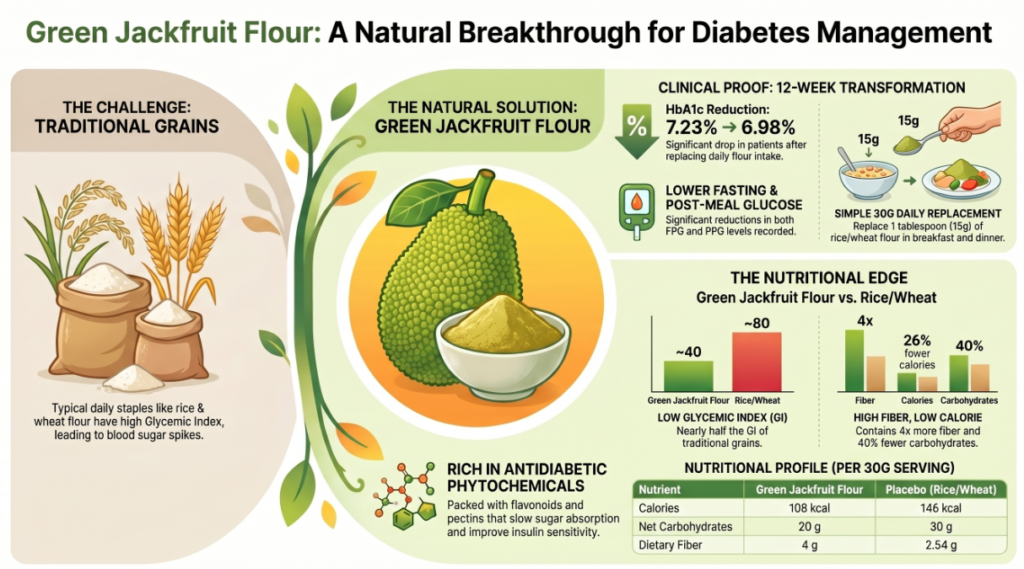
- A Superior Nutritional Profile: Compared to regular wheat or rice flour, green jackfruit flour is a nutritional powerhouse. It contains 25% fewer calories, 33% lower net carbohydrates, and 57% more dietary fiber. By substituting traditional carb-heavy flours with jackfruit flour, you drastically reduce your daily carbohydrate intake without noticing much difference in food volume.
- A Very Low Glycemic Index (GI): While ripe jackfruit is sweet and has a high glycemic index of around 75, unripe green jackfruit has a low GI of approximately 40. Because of this low GI, the carbohydrates in the flour break down very slowly during digestion, preventing the sudden, dangerous spikes in blood sugar that typically follow a meal.
- High Levels of Resistant Starch: Jackfruit seed flour is incredibly rich in resistant starch, which makes up about 75% of its total starch content. Resistant starch acts similarly to dietary fiber—it resists normal digestion, meaning it does not readily convert into glucose. It helps regulate blood sugar, lowers the overall glycemic index of a meal, and acts as a prebiotic to improve your gut flora.
- Blocking Carbohydrate-Digesting Enzymes: On a molecular level, jackfruit flour contains powerful bioactive phytochemicals like caffeic acid and syringic acid. These specific phenolic compounds actively inhibit the enzymes α-amylase and α-glucosidase in the human gut. Since these are the primary enzymes responsible for breaking down dietary carbohydrates into glucose, inhibiting them significantly slows down glucose absorption.
- Protection Against Diabetes Complications: The polyphenols in whole green jackfruit flour do more than just lower sugar. They block the enzyme aldose reductase and prevent the formation of Advanced Glycation End-products (AGEs). This means the flour helps defend the body against severe complications caused by prolonged high blood sugar, such as tissue damage and cardiovascular disease.
Exploring more about jackfruit
Jackfruit earns its “superfood” status due to a complex and highly potent profile of bioactive phytochemicals. These specific chemical compounds work at the molecular level to provide antidiabetic, anti-inflammatory, anticancer, and antiviral benefits.
GET 20% OFF ON ALL HOSTING PLANS!
Unlock 20% Off on All Hosting Plans with Hostinger!
Here is a breakdown of the specific chemical compounds that make jackfruit a nutritional powerhouse:
1. Phenolic Acids (The Diabetes Defenders)

- Caffeic Acid and Syringic Acid: These two isolated phenolic acids are the star compounds for diabetes management. They actively inhibit carbohydrate-digesting enzymes (α-amylase and α-glucosidase), preventing blood sugar spikes. They also block aldose reductase, an enzyme responsible for severe diabetic complications like tissue and eye damage. Furthermore, these compounds inhibit the MAPK3 protein, which helps revitalize insulin signaling in cases of obesity-linked diabetes.
- Gallic Acid and Ferulic Acid: Present in the flour, these contribute heavily to the fruit’s overall free-radical scavenging (antioxidant) capabilities.
2. Unique Immunological Proteins (Lectins)
- Jacalin and Artocarpin: Found predominantly in jackfruit seeds, these are unique lectins (glycoproteins). Jacalin is highly mitogenic for human CD4+ T cells and is famously used in medical research to evaluate the immune system status of patients infected with HIV-1. Jacalin has also been shown to prevent HIV-1 from infecting lymphoid cells in vitro and inhibits certain DNA viruses like herpes simplex and cytomegalovirus.
3. Flavonoids and Stilbenoids (Antioxidants & Antiviral Agents)
- Oxyresveratrol, Artocarpesin, and Norartocarpetin: These specific phenolic compounds isolated from jackfruit have demonstrated notable anticancer properties, specifically by inhibiting the generation of reactive oxygen species (ROS) that promote tumor growth. Oxyresveratrol, isolated from the heartwood, also exhibits powerful antiviral activity, effectively inhibiting both Herpes Simplex Virus Type 1 (HSV-1) and Type 2 (HSV-2).
- Resveratrol: Known for its cardioprotective and anti-inflammatory properties, this specific stilbene is found in jackfruit and defends biological membranes from oxidative damage.
- Quercetin and Kaempferol: High levels of these flavonoids contribute to the fruit’s immense antioxidant power, protecting the body’s cells from oxidative stress and inflammation.
4. Specialized Phytocompounds (Anti-Obesity)
- DBDEA (Deoxysappanone B 7,3’-dimethyl ether acetate): This specific, complex compound found in whole green jackfruit flour is a novel, highly effective inhibitor of the human MAPK3 enzyme. By binding deeply to this enzyme, DBDEA helps mitigate the cellular mechanisms that drive obesity-linked diabetes mellitus.
- Dihydroartomunoxanthone and Artocommunol CC: These compounds demonstrate strong antiplatelet activity by reducing thromboxane production. This means they act as natural antithrombotic agents, helping to prevent blood clots and atherosclerosis.
5. Carotenoids (Vision and Cell Protection)
- All-trans-lutein, All-trans-carotene, and Neoxanthin: The fleshy, edible bulbs of the jackfruit are packed with carotenoids. These specific pigments (including 9-cis-neoxanthin and 9-cis-violaxanthin) are crucial dietary antioxidants that protect against age-related macular degeneration (vision loss), cataracts, and cardiovascular diseases.
6. Saponins, Lignans, and Phytosterols
- Saponins: Found abundantly in the seeds, saponins interact with the outer coats of cancer cells, preventing them from proliferating, making them potent natural anticancer agents.
- Cycloartenol and Beta-sitosterol: These sterols, extracted from the stem, leaves, and roots, demonstrate estrogenic activities and contribute to the plant’s overall therapeutic applications.
7. Resistant Starch
- While technically a macromolecule rather than a small phytonutrient, the resistant starch in jackfruit seeds makes up about 75% of its total starch. It behaves like a functional compound by resisting human digestion, regulating blood sugar, reducing cholesterol, and acting as a powerful prebiotic to increase healthy gut bacteria.
How does it work?
The actual physiological action of jackfruit—specifically unripe green jackfruit and its seed powder—in managing diabetes operates through several distinct molecular and cellular pathways inside the body:
1. Inhibition of Carbohydrate-Digesting Enzymes Within the intestinal tract, specific polyphenolic compounds isolated from whole green jackfruit flour, namely caffeic acid and syringic acid, actively target and competitively inhibit the enzymes α-amylase and α-glucosidase. These are the primary enzymes responsible for breaking down complex dietary carbohydrates into simple glucose. By blocking their activity, jackfruit delays the breakdown of carbohydrates and significantly slows the rate at which glucose is absorbed into the bloodstream, thereby preventing sudden post-meal sugar spikes.
2. Modulation of Insulin Signaling via MAPK3 Protein Recent molecular research reveals that phytocompounds in green jackfruit flour (such as caffeic acid, syringic acid, and DBDEA) act as novel inhibitors of the human MAPK3 protein. These compounds bind deeply inside the inhibitor binding site (the c-helix region) of the MAPK3 enzyme, effectively reducing its activity. Because the MAPK3 protein is deeply integrated with the body’s insulin signaling pathway, inhibiting it helps to revitalize insulin levels, which successfully brings down hyperglycemia, especially in cases of obesity-linked diabetes. Additionally, animal studies suggest that the fruit’s extracts can directly stimulate the secretion of insulin from the available pancreatic beta cells or prompt the release of insulin from a bound form.
3. Delayed Gastric Emptying and Satiety Signaling Jackfruit seed powder is highly concentrated in resistant starch and dietary fiber, which form viscous, jelly-like substances in the digestive tract. This physical change slows down the rate of gastric emptying. Slowed digestion directly flattens the postprandial (post-meal) blood glucose curve and simultaneously increases stomach distension, which activates vagal nerve signals to the brain to promote a strong sense of satiety (fullness).
4. Blocking the Harmful Polyol Pathway During states of prolonged high blood sugar, a metabolic route called the polyol pathway becomes overactive, utilizing an enzyme called aldose reductase to convert excess glucose into sorbitol. Because sorbitol cannot easily cross cell membranes, it accumulates inside cells and causes tissue damage, leading to diabetic complications like retinopathy and nephropathy. The polyphenols in green jackfruit act as potent, non-competitive inhibitors of aldose reductase, stopping this harmful conversion process and protecting the body’s cells from sorbitol buildup.
5. Prevention of Protein Glycation and Oxidative Stress When blood glucose is persistently high, the excess sugar binds to free amino groups in the body’s proteins (glycation), eventually leading to the formation of toxic Advanced Glycation End-products (AGEs). These AGEs disrupt normal cellular functions and generate dangerous reactive oxygen species (ROS). Jackfruit extracts intervene by inhibiting this glycation process at every single stage—they block the early formation of fructosamines, reduce intermediate protein carbonyls, and prevent the late-stage accumulation of AGEs. This shields the body’s proteins from oxidative damage and preserves cellular integrity.
The Ultimate Question: Is It Over-Hyped or Does It Really Work?
The Reality: It genuinely works as a medical nutrition therapy. The claims surrounding jackfruit flour are not just traditional folklore; they are backed by modern medical science. In a randomized, double-blind, placebo-controlled clinical trial involving 40 patients with Type 2 Diabetes, patients were given 30 grams of green jackfruit flour daily for 12 weeks, replacing an equal volume of regular rice or wheat flour. The results were highly positive: the jackfruit group saw a significant reduction in Fasting Plasma Glucose (FPG), Postprandial Plasma Glucose (PPG), and their overall HbA1c levels.
The Hype Check: It is a supplement, not a magic cure. Despite these proven benefits, some marketing campaigns tend to oversell it as a standalone miracle cure. Dietitians and medical experts point out that in the 12-week clinical study, the average reduction in HbA1c for the jackfruit group was 0.25%. While this is a statistically significant and beneficial drop, it is a modest one.
Therefore, jackfruit flour should not be treated as a panacea or a replacement for your prescribed anti-diabetic medications. Instead, it is a highly effective Medical Nutrition Therapy (MNT) that should be used as an add-on to a healthy lifestyle, regular physical activity, and medical treatments to help achieve optimal glycemic control.
What about Ripe jack fruits then?
Ripe jackfruit does cause a higher blood sugar spike compared to unripe jackfruit. While green or unripe jackfruit is highly beneficial for managing diabetes, ripe jackfruit is very sweet and rich in naturally occurring sugars.
Because of this high sugar content, the glycemic index (GI) of ripe jackfruit flesh is approximately 75, which is classified as high. This high GI means that the carbohydrates in the ripe fruit are broken down and absorbed quickly into the bloodstream, leading to rapid spikes in blood glucose levels.
In stark contrast, unripe green jackfruit has a low glycemic index of around 40. Due to this significant difference, medical and nutritional experts often express concern about diabetic patients consuming the sweet, ripe fruit, and strictly recommend sticking to the unripe version or its flour to achieve optimal glycemic control.
How can I make my own jackfruit flour at home?
Making your own green jackfruit flour at home is a straightforward process. Based on the provided guidelines, here is the step-by-step method to prepare it:
Step-by-Step Guide to Making Jackfruit Flour:
- Prepare the Jackfruit: Cut open a raw, unripe jackfruit.
- Remove the Sap: Clean the sticky sap using something with raw edges, such as a coconut shell.
- Extract the Bulbs: Chop the fruit, remove the center portion, and take out the fleshy bulbs.
- Remove the Seeds: Separate the seeds from the bulbs, and cut the fleshy bulbs into smaller pieces. (Note: You can save the seeds to make jackfruit seed flour separately!)
- Steam the Pieces: Place the small pieces on a plate and put them into a steamer. Steam cook them for about 8 to 10 minutes. It is important not to add the pieces directly into the boiling water.
- Dry the Pieces: Remove the steamed pieces and spread them out on a soft cotton cloth. Place them under the sun to dry completely. To prevent the pieces from turning sticky, you can leave them under a fan during the nighttime. Ensure they are completely dry, as residual moisture can cause fungus to grow.
- Grind into Flour: Once the pieces are completely dehydrated and crisp, grind them into a fine flour using a mixer.
A Helpful Storage Tip: The dried jackfruit pieces actually have a longer shelf life than the ground flour. To ensure your flour stays fresh, it is highly recommended to store the completely dried pieces in an airtight container and just grind small batches in your mixer as you need them.
Alternative Methods:
- For Whole Green Jackfruit Flour: If you want to use the whole fruit (including the rind), you can simply wash the uncut green jackfruit thoroughly, cut it into slices, shade-dry the pieces, and grind them into a flour.
- For Jackfruit Seed Flour: If you kept the seeds, you can wash and slice them, then sun-dry them. To ensure all moisture is eliminated, you can optionally dry them in an oven at 60°C for 24 hours before grinding them into a fine powder.
Frequently Asked Questions (FAQs)
1. How much jackfruit flour should I consume, and how do I use it?
Clinical studies recommend consuming 30 grams per day (about one tablespoon). Because the flour has a neutral taste and aroma, you can easily mix it into your everyday batters and doughs to make rotis, upma, idlis, dosas, or pancakes without noticing a difference in flavor.
2. Can I eat sweet, ripe jackfruit if I am diabetic?
No, you should avoid it. Ripe jackfruit is very sweet and rich in sugars. The ripe fruit flesh has a high glycemic index of 75, which will cause your blood sugar to spike rapidly. The antidiabetic benefits are strictly linked to the unripe, green jackfruit and its seeds.
3. Does jackfruit flour help with weight loss?
Yes, it can. Because the flour is low in calories and incredibly high in both dietary fiber and resistant starch, it promotes satiety (a feeling of fullness). This helps prevent overeating and curbs mid-meal snacking, making it an excellent tool for obesity management and weight loss—which directly benefits diabetes management.
4. Are there any other health benefits to consuming it?
Absolutely! Jackfruit flour is packed with essential minerals like potassium, magnesium, and phosphorus. Thanks to its high fiber and potassium content, it aids digestion, prevents constipation, and helps reduce high blood pressure. Furthermore, research on mice has shown that incorporating jackfruit seed powder into a high-sugar diet lowers total cholesterol, triglycerides, and bad LDL cholesterol.
5. Can i eat more food with Jackfruit flour?
Clinical studies demonstrating the antidiabetic benefits of green jackfruit flour specifically emphasize its use as a replacement for an equal volume of regular, carbohydrate-heavy flours (like wheat or rice) in your daily meals, rather than just an addition to an existing or increased diet.
Here is why simply adding it to a larger volume of food will not work:
It naturally curbs overeating: Because jackfruit flour and seed powder are incredibly rich in dietary fiber and resistant starch, they promote satiety (a strong feeling of fullness). In fact, animal studies show that supplementing a high-sugar diet with jackfruit seed powder actually helps significantly decrease overall food intake and limits body weight gain.
It is a substitute, not a magic neutralizer: The flour is effective primarily because it contains 25% fewer calories, 33% lower net carbohydrates, and significantly more fiber compared to a similar volume of wheat or rice. You only reap these benefits by substituting heavier grains to lower your meal’s overall carbohydrate load. Adding it on top of an increased food intake would only add more calories and carbohydrates to your body.
It requires a balanced lifestyle: Jackfruit flour is a Medical Nutrition Therapy (MNT) meant to be an add-on to your broader diabetes management plan. It cannot be used as a substitute for a healthy lifestyle and a well-balanced diet.
6. so can i stop medication and use jackfruit flour?
No, you absolutely should not stop your prescribed medication.
While jackfruit flour is a highly effective tool for managing blood sugar levels, it is not a substitute for any anti-diabetic medication. Medical experts and clinical studies emphasize that it acts as a Medical Nutrition Therapy (MNT) which is meant to be used alongside your pharmacological treatments, not in place of them.
You should view jackfruit flour as an add-on to your overall diabetes management plan, which must still include your prescribed medications, a well-balanced diet, and regular physical activity. It is not a standalone miracle cure or panacea. Always consult with your healthcare provider before making any changes to your medication regimen.
7. Does the way jackfruit flour is processed affect its health benefits?
Yes, the processing techniques used to create jackfruit flour significantly impact its nutritional profile, health benefits, and how it behaves in cooking.
Different processing methods—especially those used for jackfruit seed flour—can enhance its nutritional bioavailability, reduce unwanted compounds, or alter its fiber content. Here is how various processing steps affect the flour:
Drying Methods: How the jackfruit is dehydrated matters. While sun drying is common, oven drying (around 60°C for 24 hours) retains higher nutritional quality and is less prone to nutrient loss or microbial contamination. Freeze-drying is considered the superior method for preserving the fruit’s bioactive compounds (like antioxidants), though it is much more expensive to perform.
Dehulling (Removing the Seed Coat): If making jackfruit seed flour, removing the outer layer is essential. The seed coat contains high levels of polyphenols and tannins; while these are antioxidants, they can impart a bitter taste and actually reduce the body’s ability to digest the nutrients.
Roasting and Boiling: Moderate roasting (at 120–150°C for 20–30 minutes) does more than just improve flavor; it actively reduces “anti-nutritional” factors like oxalates and phytates, which can otherwise block the absorption of essential minerals. However, over-roasting must be avoided, as excessive heat can denature the proteins. Blanching or boiling the seeds before drying also helps deactivate enzymes that cause browning.
Fermentation: Fermenting the flour (such as with Lactobacillus bacteria) is an excellent way to boost its health benefits. Natural fermentation increases protein bioavailability, reduces phytic acid, and introduces probiotic potential, which is highly beneficial for gut health.
Milling Size: The physical grinding process affects the flour’s fiber content. Fine milling increases the flour’s ability to absorb water (great for baking), but it can actually reduce the dietary fiber content by breaking down the fiber structures. Conversely, coarse milling retains more fiber but might result in a denser, grittier mouthfeel in baked goods.
Enzymatic Treatments: In commercial settings, enzymes like amylase or protease are sometimes applied to the flour. This modifies the starch and protein fractions to improve solubility and increase the rate of digestion, which can be tailored for high-protein or diabetic-friendly foods.
8. What is the difference between green jackfruit flour and jackfruit seed flour?
While both green jackfruit flour and jackfruit seed flour offer incredible health benefits—particularly for managing metabolic conditions—they are derived from different parts of the fruit and have distinct nutritional profiles and culinary uses.
Here is a breakdown of the key differences:
1. Source and Composition
Green Jackfruit Flour: This is made from the fleshy bulbs (and sometimes the entire whole fruit, including the peel and flakes) of a dehydrated, mature, but unripe green jackfruit.
Jackfruit Seed Flour: This is manufactured exclusively from the seeds of the jackfruit, which are removed from the fleshy bulbs. The seeds make up about 10% to 15% of the total weight of the fruit.
2. Nutritional Profile
Green Jackfruit Flour: It is highly valued for being very low in calories and net carbohydrates while being extremely rich in dietary fiber. A standard 30-gram serving contains about 108 calories, 20 grams of net carbs, and 4 to 5 grams of fiber. It is particularly rich in specific phenolic acids (like caffeic and syringic acid) that strongly inhibit carbohydrate-digesting enzymes.
Jackfruit Seed Flour: The seed flour is a high-protein powerhouse, containing between 13% and 17% crude protein, which is significantly higher than the fruit’s flesh. It is packed with essential amino acids (like leucine, valine, and isoleucine) that are often missing in regular cereal diets. Furthermore, its starch is unique: about 75% of the starch in jackfruit seeds is “resistant starch,” which resists normal digestion and acts as a powerful prebiotic for gut health. It also contains unique immunological proteins (lectins) called jacalin and artocarpin.
3. Primary Health Focus
Green Jackfruit Flour: Its primary, clinically proven application is as a Medical Nutrition Therapy for glycemic control. It is heavily utilized to actively lower Fasting Plasma Glucose, Postprandial Glucose, and HbA1c in Type 2 Diabetes patients.
Jackfruit Seed Flour: While it also helps manage blood sugar, research strongly highlights its role in obesity management and cardiovascular health. Animal studies have shown that supplementing a high-sugar diet with jackfruit seed powder significantly reduces body weight gain, liver fat accumulation, total cholesterol, triglycerides, and bad LDL cholesterol.
4. Culinary and Industrial Uses
Green Jackfruit Flour: Because it has a neutral taste, it is primarily used as a seamless, volume-for-volume substitute for wheat or rice flour in everyday home cooking (like making rotis, idlis, and dosas) to reduce a meal’s carbohydrate load.
Jackfruit Seed Flour: This flour possesses highly desirable functional properties for the food industry, such as excellent Water Absorption Capacity (WAC), Oil Absorption Capacity (OAC), and gelation. Because of these traits, it is widely used to develop gluten-free pasta, protein bars, and baked goods, and it acts as an excellent plant-based “meat extender” for vegan burgers and sausages. Interestingly, the pharmaceutical industry even uses jackfruit seed starch as a “super disintegrant” to manufacture fast-dissolving tablets.
The Bottom Line
Green jackfruit flour and jackfruit seed powder are fantastic, scientifically validated tools for managing Type 2 Diabetes. By seamlessly replacing a portion of your daily wheat or rice with this high-fiber, low-calorie alternative, you can naturally lower your blood sugar spikes while enjoying your favorite traditional meals. Just remember to view it as a powerful new weapon in your broader health and wellness arsenal, rather than a magical substitute for medical care.
References
- Alam, O., et al. (2025). “Jackfruit (Artocarpus heterophyllus) seed powder supplementation helps to maintain metabolic homeostasis in both normal and high-sugar diet-fed mice,” published in the Journal of Advanced Veterinary and Animal Research.
- Bashetti, S. (2022). “Beneficial Effects of Jackfruit to Control Type-2 Diabetes: A Practice of Medical Nutritional Therapy (MNT) along with Anti-Diabetic Drug: An update,” published in Acta Scientific Nutritional Health.
- Fatima, S. (2022). “Is Jackfruit Flour (Atta) Good for Diabetes,” published and medically reviewed on Sugar.Fit.
- Jagtap, U.B., and Bapat, V.A. (2010). “Artocarpus: a review of its traditional uses, phytochemistry and pharmacology,” published in the Journal of Ethnopharmacology.
- Joseph, J., Rao, A.G., and Nayak, S. (2020). “719-P: A Randomized, Double-Blind, Placebo-Controlled Study to Evaluate the Glucose-Lowering Effect of Green Jackfruit Flour in Type 2 Diabetes Mellitus Patients,” published in Diabetes.
- Maradesha, T., et al. (2022). “Inhibitory Effect of Polyphenols from the Whole Green Jackfruit Flour against α-Glucosidase, α-Amylase, Aldose Reductase and Glycation at Multiple Stages and Their Interaction: Inhibition Kinetics and Molecular Simulations”.
- Maradesha, T., et al. (2023). “Integrated network pharmacology and molecular modeling approach for the discovery of novel potential MAPK3 inhibitors from whole green jackfruit flour targeting obesity-linked diabetes mellitus”.
- Muskan, S., et al. (2025). “Valorization of Jackfruit Seed Flour: Potential Application in Gluten-Free and High Protein Foods- A Review,” published in the International Journal of Applied Home Science.
- Rao, A.G., et al. (2021). “Efficacy of green jackfruit flour as a medical nutrition therapy replacing rice or wheat in patients with type 2 diabetes mellitus: a randomized, double-blind, placebo-controlled study”.
- Team Fitterfly. (2021). “Science Speaks: Is Jackfruit Flour Good for Diabetes?”.
- Tripathi, K., et al. (2023). “Efficacy of jackfruit components in prevention and control of human disease: A scoping review”.