
Table of Contents
What are millets?
Millets are small-grained, non-glutinous cereal crops belonging to the grass family (Poaceae) that are cultivated primarily for their edible seeds. They are highly nutritious, non-acid-forming foods that are consumed globally by humans and used as animal feed. Agriculturally, millets are recognized as “smart foods” because they are environmentally sustainable, boast a low carbon footprint, and are highly resilient crops capable of surviving in hot, arid environments with minimal water.
How many types of millets are there?
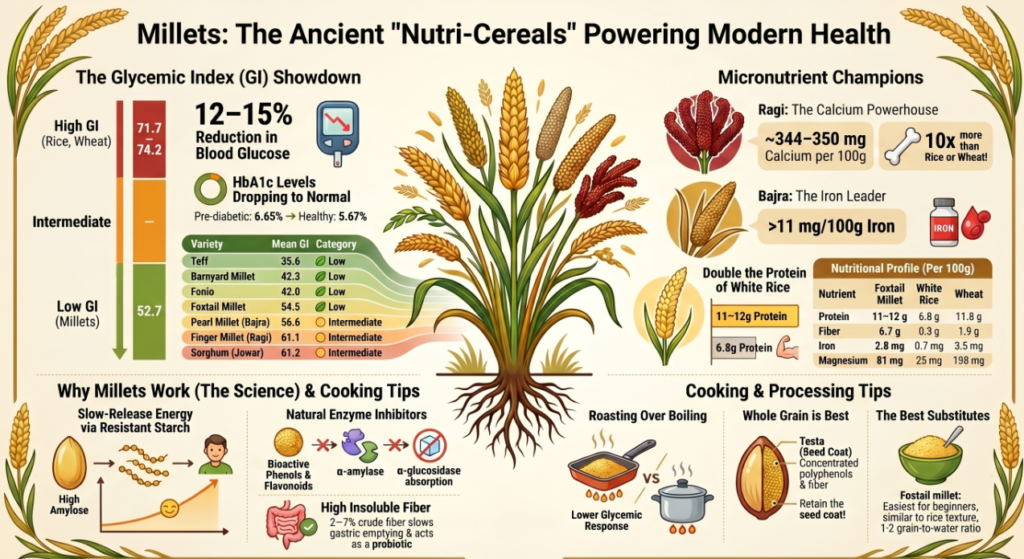
There are 13 types of millets available globally. The specific varieties include:
- Sorghum
- Pearl millet
- Finger millet
- Foxtail millet
- Little millet
- Proso millet
- Kodo millet
- Barnyard millet
- Brown top millet
- Guinea millet
- Job’s tears
- Fonio
- Teff.
Additionally, millets are sometimes categorized nutritionally based on their fiber-to-carbohydrate ratio. “Positive” millets have a ratio greater than 5, while “neutral” millets have a ratio of less than 5.
How are they digested in the body?
Millets are generally digested and absorbed much more slowly than refined grains, which helps prevent rapid spikes in blood sugar. This slow digestion process is driven by several mechanisms:
GET 20% OFF ON ALL HOSTING PLANS!
Unlock 20% Off on All Hosting Plans with Hostinger!
- High Fiber, Fat, and Protein: The high levels of dietary fiber (non-starch polysaccharides) decrease the activity of gut enzymes, which results in the incomplete or delayed hydrolysis of carbohydrates, proteins, and fats. Additionally, the protein and fat content in millets slows down gastric emptying, delaying absorption in the small intestine.
- Resistant Starch: Millets contain amylose, which promotes the formation of resistant starch. This type of starch is difficult for digestive enzymes to break down.
- Enzyme Inhibitors: The seed coat of millets is rich in phenolic compounds that naturally inhibit key carbohydrate-hydrolyzing enzymes, such as amylase and α-glucosidase, limiting the breakdown of complex carbohydrates into simple sugars.
- Impact of Processing: The way millets are cooked heavily dictates how they are digested. Processes like fine milling, boiling, pressure cooking, and puffing break down the food matrix and increase starch gelatinization, making the starches easier and faster to digest. Conversely, traditional processing methods like fermentation and germination can slow gastric emptying, and cooling cooked millets helps form more digestion-resistant starch.
What is the nutritional value of them?
Millets are considered nutritionally superior to major cereals like refined wheat and white rice. Their nutritional profile includes:
- Macronutrients: They are an excellent source of complex carbohydrates, plant-based protein (e.g., foxtail millet contains 11–12g of protein per 100g), and high dietary fiber (6–8g per 100g in foxtail millet), while remaining low in fat (typically 1–2%).
- Essential Amino Acids: They contain high amounts of essential amino acids that are often lacking in other carbohydrate-rich foods, including isoleucine, leucine, methionine, and phenylalanine.
- Vitamins and Minerals: Millets are packed with micronutrients. Finger millet, for instance, is exceptionally high in calcium (350mg per 100g). They are also rich in iron, magnesium, potassium, zinc, and B-vitamins like thiamine, riboflavin, and niacin.
- Bioactive Compounds: The outer layers of millets are concentrated with phytochemicals, polyphenols, and antioxidants that provide anti-inflammatory benefits and protect against oxidative stress.
- Gluten-Free: All millets are 100% naturally gluten-free, making them a safe and nutritious staple for individuals with celiac disease or gluten sensitivity.
What are the harmful substances released from millets?
While millets are highly nutritious, they do contain certain natural “anti-nutrients” and compounds that can have adverse effects on the body if consumed in excess or if the grains are improperly prepared.

Here are the specific substances found in millets and how they impact our health:
- Goitrogens: These compounds are particularly notable in pearl millet, also known as bajra.
- Impact: Goitrogens interfere with normal thyroid function by inhibiting the gland’s ability to uptake iodine. When consumed in excess, they can potentially cause the thyroid gland to enlarge (a condition known as goiter) and may worsen symptoms for individuals with pre-existing hypothyroidism or iodine deficiencies.
- Phytic Acid (Phytates) and Tannins: These are natural anti-nutritional elements present in the outer layers of the grains.
- Impact: Phytates and tannins bind to essential minerals—such as iron, zinc, magnesium, and calcium—which decreases their bioavailability. This means they obstruct the body’s ability to effectively absorb and utilize these crucial nutrients from your meals.
- Oxalates: Some millet varieties, such as finger millet (ragi), contain moderate levels of oxalates.
- Impact: For individuals who are already prone to developing kidney issues, overconsuming foods with high oxalate content can contribute to the formation of kidney stones.
- Stachyose and Raffinose: These are specific low-molecular-weight carbohydrates naturally found in the grains.
- Impact: During the digestion process, these carbohydrates are known to induce flatulence, which can lead to uncomfortable gas and bloating.
- Enzyme Inhibitors: Millets contain natural compounds that inhibit key carbohydrate-hydrolyzing enzymes.
- Impact: While this property is highly beneficial for diabetics because it slows down the digestion of carbohydrates and prevents rapid blood sugar spikes, in a general nutritional context, these inhibitors can obstruct the overall digestion and absorption of nutrients.
How to mitigate these effects: The negative impacts of these anti-nutritional factors can be significantly reduced through proper food preparation. Traditional techniques like soaking, sprouting (germination), and fermenting millets before cooking help to break down or leach out phytates, tannins, enzyme inhibitors, and gas-inducing carbohydrates, making the grains much easier for your body to digest. Additionally, the standard cooking process itself helps to reduce the mild effects of goitrogens.
The right way to cook millets?
The best way to cook millets depends on your health goals, particularly if you want to maximize their nutritional benefits and manage your blood sugar levels. How you prepare and apply heat to millets significantly alters their Glycemic Index (GI) and digestibility.
1. Preparation: To Soak or Not to Soak?
- Soaking: Traditionally, it is recommended to soak whole millets overnight (or for about 8 hours) before cooking or grinding them into a batter,,. Soaking helps remove anti-nutritional factors like phytic acid and tannins, which improves the absorption of essential minerals. However, soaking can also increase the availability of rapidly digested starches. To keep the GI low, soaked millets should ideally be paired with cooling or fermentation.
- Quick Cooking: If you are short on time, some specific millets like foxtail millet do not strictly require soaking; you can simply rinse them twice and cook them directly.
- Fermentation and Sprouting (Germination): These are among the healthiest preparation methods. Fermentation produces organic acids that slow stomach emptying and lower the GI. Sprouting increases resistant starch, boosts vitamin C, and makes iron much easier for your body to absorb,.
2. Choosing the Right Cooking Method
- Heat and Starch: Heat-intensive processes like boiling, pressure cooking, steaming, and baking break down the plant cell walls and gelatinize the starches,. This makes the carbohydrates easier and faster to digest, which naturally raises the GI.
- Boiling is Best: While all heat raises the GI, boiling increases it the least (by about 11.3 units), compared to baking (16.3 units) and steaming (18.4 units),. Boiling unprocessed or coarsely ground millets maintains an average low GI of around 52.1.
- Avoid Fine Flours: If you are cooking with millet flour, choose coarsely ground (stone-milled) flour over finely ground industrial flour. Larger particles resist rapid starch gelatinization and slow down digestion,.
3. The “Cooling” Trick for Diabetics One of the most effective techniques to lower the GI of cooked millets is to let them cool. After cooking, placing the millet in the fridge for about 4 hours allows the starches to retrograde and form resistant starch (RS3),. Resistant starch is difficult for digestive enzymes to break down, and this simple cooling step can drop the GI by an additional 10–15 points. You can then gently reheat the millet before eating,.
4. Practical Steps for Cooking Millet like Rice If you are cooking whole millets as a direct replacement for white rice:
- Use a ratio of 1 part millet to 2 or 2.5 parts water,.
- Bring the water to a boil, then cover the pot and cook on a low flame for 15–18 minutes,.
- Do not open the lid during cooking. Letting the steam escape will make the millet sticky instead of fluffy.
Which millets are the best for diabetics?
Foxtail millet, barnyard millet, Job’s tears, fonio, and teff are considered the best millets for diabetes because they fall into the low Glycemic Index (GI) category (GI < 55). These millets are highly effective at reducing the dietary GI of a meal by 35–79% compared to refined staples like white rice and wheat.
Here is a breakdown of the top millets for diabetes management and why they are effective:
1. The Best Low-GI Millets (GI < 55)
- Foxtail Millet: With a GI of 50–54, this is widely recommended by doctors as the first rice replacement for diabetics. It contains 11–12g of protein and 6–8g of fiber per 100g, which slows digestion, keeps you full, and prevents sudden sugar spikes. Clinical trials show that replacing refined grains with 100g/day of millet can reduce insulin resistance by 25-30% and help normalize fasting plasma glucose in prediabetics.
- Barnyard Millet: This millet has a remarkably low mean GI of 42.3. Its high dietary fiber and slowly digestible carbohydrates make it highly beneficial for reducing fasting plasma glucose in diabetic patients.
- Job’s Tears, Fonio, and Teff: These millets have exceptionally low GIs (Job’s tears: 54.9, Fonio: 42.0, Teff: 35.6). They provide a significantly lower and more stable glycemic response compared to standard control meals.
2. Excellent Intermediate-GI Millets (GI 55–69)
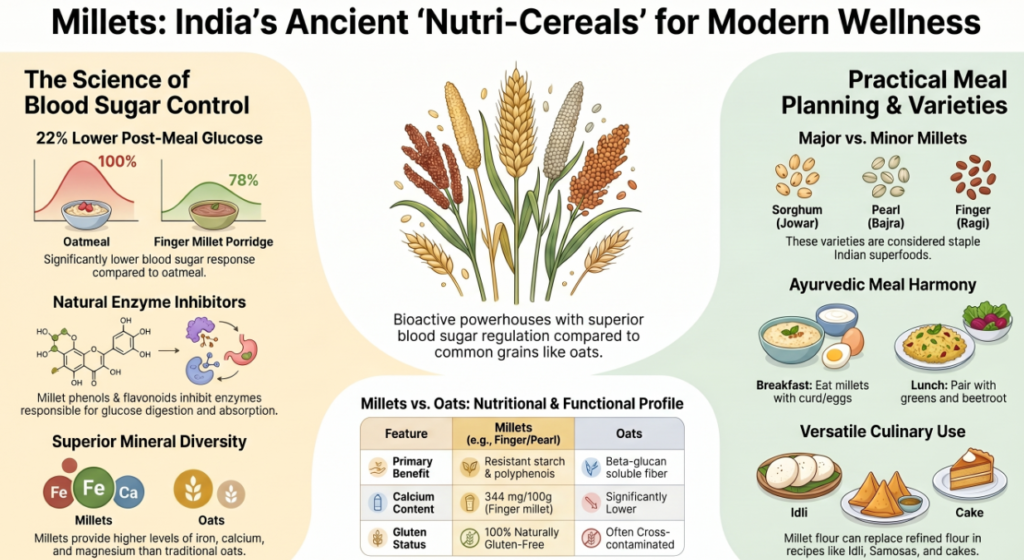
- Finger Millet (Ragi): With a GI of around 61.1, finger millet is a powerful tool for blood sugar control. Its outer seed coat is packed with polyphenols that naturally inhibit carbohydrate-hydrolyzing enzymes (like α-glucosidase and amylase), effectively minimizing rapid spikes in blood glucose. In direct clinical comparisons, finger millet porridge produced a 22% lower post-meal blood glucose response than oatmeal in type 2 diabetics.
- Pearl Millet (Bajra): Bajra has a GI of 56.6 and is notably rich in magnesium, a mineral that activates insulin receptors and directly enhances insulin sensitivity. Its high fiber content slows carbohydrate digestion, helping to reduce post-meal sugar spikes and improve long-term HbA1c levels.
- Kodo Millet and Sorghum: Both fall into the intermediate GI category (65.4 and 61.2 respectively) but still offer a significantly lower glycemic index than refined wheat or milled rice, making them healthy additions to a diabetic diet.
Important Considerations for Diabetics Regardless of the millet chosen, the way it is cooked heavily impacts its benefits. Heat-intensive processes like boiling, pressure cooking, and puffing can increase the GI by gelatinizing the starches, making them easier and faster to digest. Conversely, techniques like cooling cooked millet in the fridge before reheating helps form resistant starch, which can lower the GI by another 10–15 points.
How millets help in managing diabetes?
Millets are highly effective in managing diabetes because their structural and nutritional properties directly target the mechanisms of blood sugar regulation:
- Low Glycemic Index (GI) and High Fiber: Millets are rich in dietary fiber, which delays gastric emptying and reduces the activity of digestive enzymes in the gut. This results in a slower, more gradual absorption of glucose into the bloodstream, preventing rapid blood sugar spikes.
- Natural Enzyme Inhibitors: The outer layers of millets contain polyphenols and other phytochemicals that naturally inhibit key carbohydrate-hydrolyzing enzymes, such as α-amylase and α-glucosidase. This limits the breakdown of complex carbohydrates into simple sugars.
- High Resistant Starch: Millets contain amylose, which promotes the formation of resistant starch—a type of carbohydrate that resists enzymatic digestion in the small intestine.
- Enhanced Insulin Sensitivity: Millets are packed with essential minerals like magnesium, which activates insulin receptors and enhances the body’s insulin sensitivity. Clinical trials show that replacing refined grains with millets can reduce insulin resistance by 25–30%.
- Long-term HbA1c Reduction: Because millets reduce the overall availability of glucose, long-term consumption has been clinically proven to significantly reduce HbA1c levels in both pre-diabetic and diabetic individuals.
How to include millets in a diabetic meal plan:
To maximize the benefits of millets for blood sugar control, how you prepare and portion them is just as important as eating them:
- Swap Out Refined Grains: Use low-GI millets like foxtail millet, barnyard millet, or bajra (pearl millet) as a direct replacement for white rice or refined wheat. Foxtail millet, for instance, cooks exactly like rice (using a 1:2 grain-to-water ratio) and can be served alongside your regular dal and vegetables.
- Practice Portion Control: Although millets have a low GI, they are still a carbohydrate source. Stick to 1 to 2 servings (about 30–50 grams of raw grain) per meal, or roughly 100g per day, to avoid unintended sugar spikes.
- Utilize the “Cool and Reheat” Trick: After cooking millets, let them cool completely in the refrigerator for about 4 hours before eating. Cooling promotes starch retrogradation, forming resistant starch (RS3) which can lower the Glycemic Index by an additional 10–15 points. You can then reheat them gently before serving.
- Choose the Right Cooking Methods: Heat-intensive processes like pressure cooking, fine milling into flour, or puffing can break down the grain’s matrix and rapidly gelatinize the starches, raising the GI. Boiling whole or coarsely ground millets is the best thermal method, as it maintains a low average GI.
- Ferment or Sprout Your Millets: Traditional preparation methods like fermentation (e.g., making idli or dosa batter) produce organic acids that slow stomach emptying. Germination (sprouting) increases resistant starch and enhances the bioavailability of nutrients.
- Pair with Protein and Fat: To keep you full longer and further slow carbohydrate digestion, cook or pair millets with protein-rich foods like lentils, eggs, or chicken, and use a small amount of healthy fats like ghee or olive oil.
Do some people experience indigestion for millets?
Yes, some people can experience stomach upset or digestive discomfort when consuming millets, particularly if they are not used to eating them.
Here is why this happens and how you can prevent it:
- Sudden Increase in Fiber: Millets are very high in dietary fiber. If your body is not accustomed to a high-fiber diet, suddenly introducing millets can cause initial digestive discomfort.
- Gas-Inducing Carbohydrates: Grains and legumes contain certain low-molecular-weight carbohydrates, such as stachyose and raffinose, which are known to induce flatulence (gas and bloating) during the digestion process.
How to avoid stomach upset:
- Introduce them gradually: If you are eating millets for the first time, it is recommended to start with just one meal a day. You can gradually increase your intake over two weeks, which gives your gut time to adapt without causing discomfort.
- Soak before cooking: Soaking millets in water before you cook them is highly beneficial. The soaking process encourages the flatulence-inducing carbohydrates and other anti-nutritional factors to leach out into the water, making the millets much easier for your body to digest.
It is also worth noting that once your digestive system adjusts to the new fiber intake, millets actually improve gut health. People who eat them daily often report experiencing less bloating and more regular bowel movements after the first two weeks.
Viruddha Ahara
Viruddha Ahara (or viruddham) is an Ayurvedic concept that refers to an incompatible diet or harmful food pairings. These are food combinations, incorrect quantities, or improper processing methods that disrupt normal digestion, interrupt the metabolism of tissues, inhibit proper tissue formation, or exhibit properties that are contrary to the body’s natural tissues.
When it comes to consuming millets, here are the specific items that should not be mixed with them:
- Different types of millets (Millet Mixes): You should avoid mixing multiple types of millets together in the same meal. Because each millet has a unique composition of fiber, protein, and carbohydrates, they digest at different rates; mixing them can lead to bloating and indigestion. Furthermore, mixing millets causes their nutrients to compete for absorption—for instance, the high calcium in finger millet (ragi) can block your body from absorbing the iron in foxtail millet—and their individual health benefits may cancel each other out.
- Milk: Combining foxtail millet with milk is considered a mutually contradictory food pairing in Ayurveda. Additionally, consuming proso millet alongside milk is contraindicated, as this combination is believed to cause skin conditions.
- Curd, Buttermilk, and Oil: Consuming proso millet with curd, buttermilk, or oil is also considered an incompatible combination. Furthermore, mixing millets with curd (yogurt) can generally create heaviness in the stomach, which may not be ideal for everyone’s digestion.
Is longterm consumption of millets safe in diabetics? should i stop eating rice completely?
Long-term consumption of millets is not only safe but clinically proven to be highly beneficial for managing diabetes. Studies spanning several weeks to over three months show that an acclimatized millet diet significantly reduces fasting blood glucose by about 12% and post-meal blood glucose by 15%. Crucially, long-term consumption effectively lowers HbA1c levels, which is a key marker of long-term blood sugar control, by reducing the overall availability of glucose in the bloodstream.
As for rice, you do not have to stop eating it entirely overnight, but gradually replacing refined white rice with low-GI millets is one of the most effective dietary changes you can make. Polished white rice has a high Glycemic Index (around 71.7) and digests rapidly, causing sudden sugar spikes. Millets, on the other hand, cook exactly like rice but have a much lower GI, double the protein, and higher fiber, which keeps you full longer and slows down sugar absorption.
If you are accustomed to eating rice daily, abruptly stopping might cause initial digestive discomfort like bloating due to the sudden increase in dietary fiber. To transition comfortably, you can follow this strategy:
- The 50/50 Method: For the first week, cook a mixture of 50% white rice and 50% of a single millet (like foxtail millet) together in the same pot. The taste and texture will be very similar to what you are used to.
- Gradual Transition: In the second or third week, you can move to 100% millets. Remember to drink plenty of water throughout the day to help your body process the increased fiber.
- Avoid Millet Mixes: While mixing a single millet with rice during the transition is fine, remember the Ayurvedic guideline to never mix different types of millets together in one meal, as their different digestion rates can cause bloating and reduce nutrient absorption.
How will adding some rice to millets in the meal (cook a mixed food) impact the glycemic index?
Adding some rice to a single type of millet to cook a mixed food will result in an intermediate Glycemic Index (GI)—significantly lower than eating pure white rice, but potentially slightly higher than eating 100% millets.
Here is how mixing rice and millets impacts the GI and your digestion:
- Lowers the Overall Meal GI: Polished white rice digests rapidly and has a high average GI of 71.7 (ranging from 70 to 89). Millets have a much lower average GI of around 52.7. By swapping out a portion of white rice for a low-GI millet (like foxtail millet, which has a GI of 50–54), you increase the fiber and protein in the meal. This slows down digestion and reduces the overall glycemic load, meaning your blood sugar will rise more gently than it would with pure rice.
- “Mixed Millet” Clinical Results: Clinical analyses have specifically evaluated “mixed millet” preparations (defined in the studies as a mixture of millets and other crops). These studies found that mixed millet meals maintain a very low average GI of 42.7, effectively reducing the dietary GI compared to eating refined staples like maize or white rice alone.
- An Excellent Transition Strategy: Cooking a 50/50 mixture of white rice and a single millet (such as foxtail millet) together in the same pot is actively recommended for beginners. It provides a familiar taste and texture, minimizes the risk of sudden digestive discomfort from increased fiber, and acts as a stepping stone before gradually transitioning to 100% millets for optimal blood sugar control.
- Crucial Rule for Mixing: While it is perfectly fine to mix one type of millet with white rice, you should never mix multiple different types of millets together (e.g., cooking foxtail, finger, and pearl millet in the same pot). Because each millet variety has a unique composition of fiber, protein, and carbohydrates, they digest at different rates. Mixing different millets can confuse your digestive system, leading to bloating, indigestion, and reduced nutrient absorption.
"A Systematic Review and Meta-Analysis of the Potential of Millets for Managing and Reducing the Risk of Developing Diabetes Mellitus - Frontiers"
"A systematic review and meta-analysis of the potential of millets for managing and reducing the risk of developing diabetes mellitus - CentAUR"
"Foxtail Millet Benefits & Recipes: The Best Grain for Diabetics - InstaCuppa Store"
"Why Mixing Millets Reduces Health Benefits - Organic Gyaan"
Best millet recieps
Here are some of the best and easiest daily recipes using foxtail millet, which is highly recommended for managing blood sugar.
1. Foxtail Millet Rice (The Easiest Substitute) This is the simplest way to replace white rice in your daily meals.
- Ingredients: ½ cup foxtail millet, 1¼ cups water, pinch of salt.
- Method: Rinse the millet twice under cold water. Bring the water and salt to a boil in a pot, add the millet, cover with a lid, and cook on a low flame for 15 minutes. Turn off the heat, let it rest for 5 minutes, and fluff it with a fork. Remember not to open the lid while cooking so it does not become sticky.
2. Diabetic-Friendly Foxtail Millet Porridge
- Ingredients: 2 tbsp foxtail millet flour, 1 cup milk or water, a pinch of cardamom, and a pinch of cinnamon.
- Method: Mix the millet flour with 3 tablespoons of cold water to form a smooth, lump-free paste. Bring the milk or water to a boil, then slowly stir in the paste. Cook on a low flame for 7 minutes until it thickens. Adding cinnamon instead of jaggery or sugar helps further improve insulin sensitivity.
3. Foxtail Millet Khichdi
- Ingredients: ½ cup foxtail millet, ½ cup masoor dal, 2 cups water, mixed vegetables (like carrots and peas), ½ tsp cumin, ¼ tsp turmeric, 1 tsp ghee, and salt.
- Method: Rinse the millet and dal together. Add them to a pressure cooker along with the water, vegetables, and spices. Pressure cook on a medium flame for 2 whistles. Let the pressure release naturally, mix gently, and top with ghee before serving.
4. Foxtail Millet Upma
- Ingredients: ½ cup foxtail millet, 1½ cups hot water, chopped onion, green chili, mustard seeds, curry leaves, oil, lemon juice, and salt.
- Method: Heat oil, pop the mustard seeds, and sauté the curry leaves, onion, and chili for 3 minutes. Add the millet and sauté for 2 minutes. Pour in the hot water and salt, cover, and cook on a low flame for 15 minutes. Finish with a squeeze of lemon juice.
5. Foxtail Millet Pongal
- Ingredients: ½ cup foxtail millet, ¼ cup moong dal, 2 cups water, 1 tsp ghee, cumin, pepper, grated ginger, and curry leaves.
- Method: Cook the millet and dal together with 2 cups of water until soft. In a separate pan, heat the ghee and sauté the cumin, pepper, curry leaves, and ginger for 30 seconds. Mix this tempering into the cooked millet and dal.
Beyond these, the sources include dozens of traditional Indian recipes using different millets, such as Pearl Millet (Bajra) Pesarattu or Thalipeeth, Finger Millet (Ragi) Dosa or Mudde, Kodo Millet Dhokla, and Little Millet Mushroom Biryani.
Are roasted and powdered millets good?
Moderate roasting and coarse powdering can be good, but excessive heat and fine grinding can significantly reduce the health benefits of millets, especially for blood sugar control.
Roasted Millets: Roasting is a dry-heat cooking method that can have both positive and negative effects depending on how much heat is applied. Moderate roasting can actually help lower the Glycemic Index (GI) by triggering the Maillard reaction (browning). This process creates starch-protein complexes that make the carbohydrates harder for your digestive enzymes to access. In fact, some clinical observations note that roasting results in slower digestion rates compared to high-moisture, high-heat methods like pressure cooking or steaming. However, excessive roasting is harmful because it can denature the grain’s natural proteins and break down its resistant starch, ultimately making the carbohydrates digest rapidly and causing blood sugar spikes.
Powdered Millets (Milled/Ground Flour): Turning whole millets into a fine powder generally increases their Glycemic Index and causes them to digest much faster. Grinding destroys the protective physical barrier of the plant cell walls and drastically increases the grain’s surface area. This allows digestive enzymes, such as α-amylase, to rapidly interact with and break down the starches into glucose, which can lead to quick blood sugar spikes.
If you want to cook with powdered millets, the milling method you choose is crucial. You should always opt for coarsely ground (stone-milled) flour over finely ground industrial flour. Coarser particles resist rapid starch gelatinization and are much harder for digestive enzymes to break down, which helps maintain a lower, safer glycemic response.
How are millets different from oats?
While both millets and oats are excellent, evidence-based whole grains for managing blood sugar, they differ significantly in how they function in the body and their overall nutritional profiles:
- Mechanism for Blood Sugar Control: Oats slow down glucose absorption primarily through beta-glucan, a highly viscous soluble fiber that forms a gel in your gut. Millets, however, rely on a combination of resistant starch, insoluble fiber, and polyphenolic enzyme inhibitors to prevent rapid blood sugar spikes.
- Mineral Density: Millets offer superior mineral diversity compared to oats. For example, finger millet is exceptionally high in calcium (344 mg per 100g), and pearl millet is rich in iron (>11 mg per 100g). Millets generally provide more magnesium and zinc than oats do.
- Gluten-Free Profile: Millets are naturally 100% gluten-free, making them a safer choice for the estimated 10% of diabetics who also have celiac disease or gluten sensitivity.
Which one is better? For strict blood sugar control, millets may have a slight advantage. A direct clinical trial comparing the two found that individuals with type 2 diabetes who ate finger millet porridge experienced a 22% lower post-meal blood glucose response after two hours compared to when they ate oatmeal. Additionally, the broader micronutrient density of millets makes them highly beneficial.
However, you do not necessarily have to choose between them. Combining millets and oats into a mixed meal provides your body with complementary types of fiber (both the beta-glucan from oats and the resistant starch from millets), which offers the broadest benefits for glycemic control.
Are commercially available millet mix powders good?
Commercially available “millet mix powders” are generally not recommended because both the mixing of different millets and the powdering process significantly reduce their health benefits, especially for managing blood sugar.
Here is why you should avoid them:
1. The Problem with Mixing Millets Food scientists and millet experts strongly advise against eating multiple millets together in one meal.
- Different Digestion Rates: Every millet has a unique composition of carbohydrates, protein, and fiber, meaning they take different amounts of time to digest. Mixing them can confuse your digestive system, often leading to bloating and indigestion.
- Reduced Nutrient Absorption: The varying vitamins and minerals in different millets can compete for absorption. For example, if a mix contains ragi (which is high in calcium) and foxtail millet (which is rich in iron), the calcium can actually block your body from properly absorbing the iron.
- Canceled-Out Benefits: Each millet targets specific health functions, such as foxtail millet for blood sugar control or browntop millet for detoxification. When you mix them, these individual benefits overlap and cancel each other out, preventing your body from getting the full effect of any single grain.
2. The Problem with Fine Powders
- High Glycemic Index (GI): Grinding millets into a fine powder destroys the intact plant cell walls and drastically increases the grain’s surface area. This allows digestive enzymes (like α-amylase) to rapidly break down the starches, which speeds up the release of glucose during digestion and causes a sudden spike in blood sugar.
- Loss of Structural Barriers: Finely ground flours lack the natural physical barriers that usually slow down digestion, making them much faster to digest than whole or coarsely ground grains.
To get the most out of millets, it is highly recommended to eat one type of whole millet at a time.
Best meal plan with millets
Here is a balanced, repeating weekly meal plan using millets. This plan is designed to keep the glycemic index low, incorporate adequate protein and fiber, and strictly follow Ayurvedic principles by using only one type of millet per meal to ensure optimal digestion and nutrient absorption.
| Day | Breakfast | Lunch | Dinner |
|---|---|---|---|
| Monday | Foxtail Millet Upma: Cooked with carrots, peas, and a side of lightly cooked greens and beetroot. | Barnyard Millet “Rice”: Served with fish curry (or lentils/dal for vegetarians) and bitter gourd. | Pearl Millet (Bajra) Roti: Served with a side of boiled eggs (or paneer) and sautéed spinach. |
| Tuesday | Finger Millet (Ragi) Porridge: Made with milk/water, cardamom, and a pinch of cinnamon (skip jaggery/sugar). | Kodo Millet Khichdi: Pressure-cooked with moong dal, turmeric, and mixed vegetables. | Little Millet Dosa: Fermented batter served with a light vegetable sambar. |
| Wednesday | Sorghum (Jowar) Cheela (Savoury Pancake): Served with mint or peanut chutney. | Foxtail Millet “Rice”: Served with chicken curry (or chickpea curry) and a side salad. | Barnyard Millet Upma: Cooked with ginger, mustard seeds, and light sautéed vegetables. |
| Thursday | Pearl Millet (Bajra) Roti: Served with a side of cooked greens and beetroot. | Finger Millet (Ragi) Mudde (Soft Ball): Served with a hearty lentil and vegetable stew. | Kodo Millet Pulao: Cooked with green beans, carrots, and whole spices like cumin and cinnamon. |
| Friday | Foxtail Millet Pongal: Cooked with moong dal, black pepper, cumin, and a teaspoon of ghee. | Little Millet “Rice”: Served with a side of greens and daytime curd seasoned with roasted cumin. | Sorghum (Jowar) Roti: Served with egg curry (or mixed vegetables) and a side salad. |
| Saturday | Barnyard Millet Idli: Served with coconut chutney. | Proso Millet “Rice”: Served with fish (or dal) and a side of sautéed bitter gourd. | Foxtail Millet Khichdi: Cooked with masoor dal, mixed vegetables, and a teaspoon of ghee. |
| Sunday | Kodo Millet Upma: Cooked with mustard seeds, curry leaves, and vegetables. | Pearl Millet (Bajra) Khichdi: Served with mixed vegetables and a small side of fresh daytime buttermilk. | Finger Millet (Ragi) Roti: Served with light greens and beetroot. |
Important Dietary Guidelines for this Plan:
- Do Not Mix Millets: Each meal uses only one specific type of millet. Mixing multiple millets (like multi-millet flour) confuses the digestive system due to differing digestion rates and blocks the absorption of competing nutrients.
- Portion Control: Stick to 1 to 2 servings (about 30–50 grams of raw grain) of millet per meal to prevent unintended blood sugar spikes.
- Ayurvedic Food Pairings (Viruddha Ahara): This plan carefully separates incompatible foods. Never mix fish or eggs with curd (yogurt). Curd should only be consumed during the daytime (like lunch on Friday and Sunday) and avoided entirely at night.
- The “Cooling” Trick: To make your lunches even better for your blood sugar, cook your millet “rice” in advance and cool it in the refrigerator for 4 hours. This forms digestion-resistant starch, which lowers the glycemic index by an additional 10–15 points before you gently reheat it.
Conclusion
Millets represent a powerful, nutrient-dense dietary intervention for managing and even reversing prediabetes and type 2 diabetes. Their unique composition—featuring high dietary fiber, resistant starch, and natural polyphenolic enzyme inhibitors—slows carbohydrate digestion, preventing rapid blood glucose spikes and significantly lowering long-term HbA1c levels.
However, to fully harness these health benefits, proper preparation is essential. Techniques like boiling whole grains and letting them cool maximize resistant starch and keep the Glycemic Index low, while intensive methods like puffing or pressure cooking break down the grain structure and should be minimized.
Furthermore, adhering to traditional and Ayurvedic principles by eating one type of millet at a time and avoiding incompatible food pairings (viruddha ahara) ensures optimal digestion and prevents nutrient absorption issues. By thoughtfully transitioning to properly cooked, single-millet meals, you can safely and effectively support long-term metabolic health and glycemic control.
References
- “5 Millets For Diabetes | Amazing Benefits of Eating Millets”: A YouTube video discussing the properties of various millets and their health benefits, including boosting immunity and managing respiratory and stomach issues.
- “A Systematic Review and Meta-Analysis of the Potential of Millets for Managing and Reducing the Risk of Developing Diabetes Mellitus – Frontiers”: A 2021 meta-analysis published in Frontiers in Nutrition evaluating the low glycemic index (GI) of millets and their effectiveness in reducing blood glucose levels.
- “A comprehensive review on influence of millet processing on carbohydrate-digesting enzyme inhibitors and implications for diabetes management – PubMed”: A 2025 review by Bhujle et al. exploring how different processing methods affect the bioactive compounds and carbohydrate-digesting enzyme inhibitors in millets.
- “A systematic review and meta-analysis of the potential of millets for managing and reducing the risk of developing diabetes mellitus – CentAUR”: A repository copy of the 2021 systematic review from the University of Reading’s archive.
- “Can Millet Reverse Prediabetes? Evidence and Dietary Strategies | millets.news”: An article providing Level I clinical evidence that millet-based dietary interventions can normalize prediabetic markers.
- “Finger millet based-muffin decreases insulin response in individuals with prediabetes in a randomised controlled trial | CentAUR”: A 2023 clinical trial by Almaski et al. demonstrating that finger millet muffins significantly attenuate postprandial insulin responses compared to wheat muffins.
- “Foxtail Millet Benefits & Recipes: The Best Grain for Diabetics – InstaCuppa Store”: A 2026 blog post outlining the nutritional benefits of foxtail millet and providing diabetic-friendly Indian recipes.
- “How does millet compare to oats for blood sugar control?”: An article from millets.news comparing the mechanisms through which millets and oats affect body fat and blood sugar control.
- “How to plan 3 meals with greens, beetroot, eggs, fish, bitter gourd, curds, and millet without causing viruddham? – 3 answers from Ayurvedic Doctors – Ask Ayurveda”: Ayurvedic consultations advising on how to properly pair millets with other foods to avoid Viruddha Ahara (incompatible food combinations).
- “Impact of Adding a Millet Diet on Glycemic Control and Lipid Profile in Patients with Type 2 Diabetes Mellitus – PMC”: A PMC database article (content restricted by host security).
- “Impact of Gluten-Free Sorghum Bread Genotypes on Glycemic and Antioxidant Responses in Healthy Adults – PMC”: A PMC database article (content restricted by host security).
- “Impact of cooking and processing methods on the glycemic response of legumes and cereals: A review”: A 2025 paper in the International Journal of Advanced Biochemistry Research analyzing how thermal (boiling, puffing) and non-thermal (fermenting, germinating) processing alters glycemic response.
- “Is Bajra Good for Diabetes? Doctor’s Guide & Tips – Sanidhya Clinic”: A 2024 guide discussing the nutritional composition of bajra (pearl millet) and how to include it in a diabetic diet.
- “Millet Intake and Risk Factors of Type 2 Diabetes: A Systematic Review – Oxford Brookes University”: A 2019 systematic review evaluating the effects of consuming different forms of millets on fasting blood glucose and plasma insulin levels.
- “Millet Recipes”: A 2021 publication by the ICAR – Indian Institute of Millets Research featuring numerous traditional and modern recipes for major and minor millets.
- “Millets Benefits, Qualities, Varieties, Research, Recipes – Easy Ayurveda”: An Ayurvedic guide by Dr. J V Hebbar detailing the medicinal qualities, proper consumption, and dosha-balancing properties of millets.
- “Ragi (Eleusine coracana): A Review of Its Nutritional Composition and Health Benefits – Open Science Publications”: A 2025 review detailing the nutritional profile of finger millet, highlighting its rich calcium and iron content for bone health, anemia, and diabetes management.
- “Ragi, Jowar, Bajra: Do’s and don’ts of eating millets – The Times of India”: An article covering guidelines for safely consuming common millets.
- “Role of millets in pre-diabetes and diabetes: effect of processing and product formulation – PMC”: A PMC research article evaluating how processing changes millet’s impact on diabetes.
- “Side Effects of Millets – vedasmillets.com”: A webpage from Vedas Millets focusing on the potential side effects and safe consumption of millets.
- “The Glucose-Lowering Effect of Foxtail Millet in Subjects with Impaired Glucose Tolerance: A Self-Controlled Clinical Trial – PMC”: A PMC clinical trial article (content restricted by host security).
- “VIRUDDHA AHARA IN AYURVEDA: UNDERSTANDING HARMFUL FOOD PAIRINGS AND THEIR IMPACT – WJPMR”: A 2025 paper by Prof. Manohar Ram outlining the Ayurvedic concept of incompatible diets and processing methods that disrupt digestion.
- “Why Mixing Millets Reduces Health Benefits – Organic Gyaan”: A blog post explaining the adverse effects of consuming multi-millet blends and why single-millet meals are superior.